
Before a building or part of a structure is demolished, the work needs to be properly planned. Demolition involves more than removing concrete, walls, or other building elements. The team must understand the structure, define what will be removed, choose suitable methods, consider existing services, and establish a safe sequence of work.
This is where a demolition plan becomes important. It provides a structured approach to the project and helps everyone involved understand how the demolition is expected to proceed.
What Is a Demolition Plan?
A demolition plan is a document that outlines the proposed approach for removing a building or selected parts of a structure. It generally covers the demolition scope, work sequence, methods, equipment, site conditions, safety measures, and debris removal.
The plan may be prepared for:
- Complete building demolition
- Partial structural demolition
- Internal demolition
- Concrete wall and slab removal
- Renovation projects
- Structural modifications
- Removal of selected building sections
The exact requirements depend on the project’s size, structure, location, and scope.
Why Is a Demolition Plan Important?
Demolition is not simply a matter of breaking and removing materials. Existing buildings can contain structural elements, electrical services, plumbing, HVAC systems, reinforcement, and other components that need to be considered before work begins.
A properly prepared demolition plan helps the project team understand:
- What needs to be removed
- What must remain in place
- The sequence of demolition
- Which methods and equipment are suitable
- How workers and surrounding areas will be protected
- How demolition debris will be handled
This is especially important for partial demolition, where the remaining structure must be protected while selected sections are removed.
What Does a Demolition Plan Include?
The contents of a demolition plan vary from project to project, but several important areas are normally considered.
1. Demolition Scope
The plan should clearly identify the areas and elements that will be removed. This could include walls, slabs, partitions, roof sections, or other structural and non-structural elements.
2. Site and Structural Assessment
The existing structure should be assessed before selecting the demolition method. Construction type, structural arrangement, building condition, access, surrounding structures, and available working space can all affect the approach.
3. Demolition Sequence
The sequence explains the order in which different elements will be removed. A logical sequence helps the site team coordinate the work and manage the remaining structure throughout the project.
4. Demolition Methods and Equipment
The appropriate method depends on the structure and project requirements. Depending on the application, work may involve mechanical demolition, controlled dismantling, concrete breaking, or precision techniques such as core cutting, wall sawing, floor sawing, and wire sawing.
Precision concrete cutting can be useful when selected sections need to be separated before removal. For example, floor sawing services may be suitable for concrete slabs, trench cutting, structural modifications, and certain demolition applications.
The equipment should be selected according to the structure, access conditions, required precision, and project requirements rather than using the same method for every demolition project.
5. Existing Utilities and Embedded Elements
Existing electrical conduits, plumbing, HVAC components, reinforcement, post-tensioning systems, and other embedded elements should be considered before concrete cutting or demolition.
Where concrete needs to be cut, concrete scanning can help identify embedded elements before cutting begins.
This can be particularly useful when accurate information about the existing concrete is required before selecting a cutting method.
6. Safety and Debris Management
The plan should consider site access, controlled work areas, equipment operation, falling materials, dust, debris, and protection of surrounding areas.
It should also consider how demolished materials will be collected, moved, and removed from the work area.
How Is a Demolition Plan Prepared?
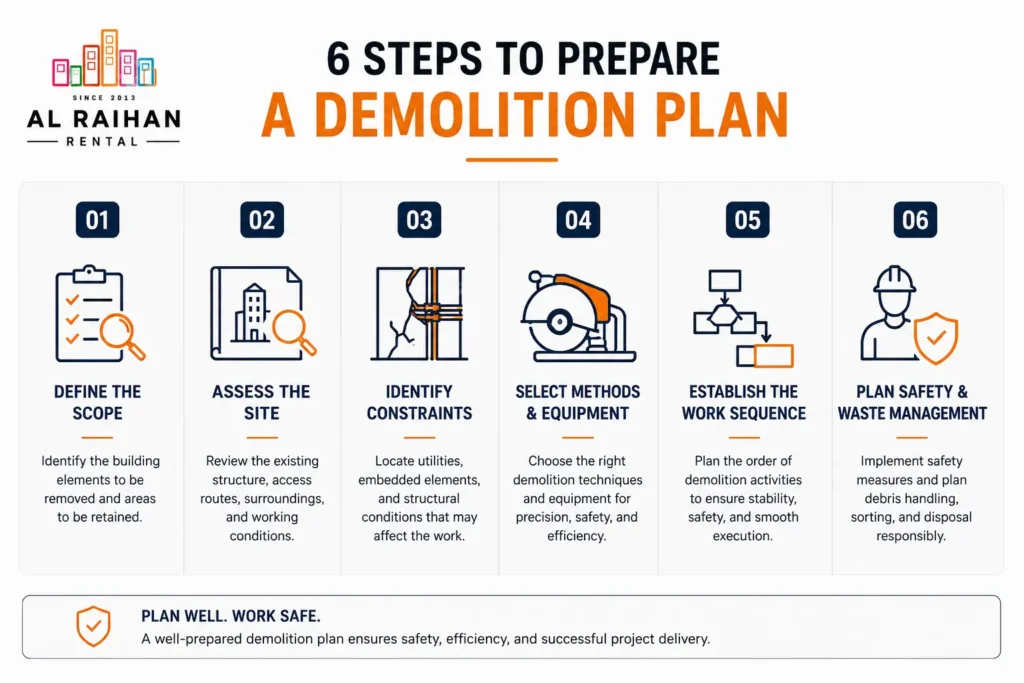
So, how to make a demolition plan? The process generally starts with understanding the structure and defining the exact scope of work.
Step 1: Define the Scope
Identify exactly which parts of the building or structure will be demolished and which areas must remain.
Step 2: Assess the Site
Review the existing structure, access routes, working space, surrounding areas, and available project information.
Step 3: Identify Structural Elements and Services
Determine which structural components are involved and check for existing utilities or embedded elements that could affect demolition.
Step 4: Select the Demolition Method
Choose suitable methods and equipment according to the structure, access, required precision, and project conditions.
Step 5: Establish the Work Sequence
Arrange the demolition activities in a logical order so the site team knows how each stage will proceed.
Step 6: Plan Safety and Debris Removal
Establish appropriate site controls and determine how demolition waste will be safely managed and removed.
Demolition Planning in Dubai and Abu Dhabi
Demolition projects in Dubai and Abu Dhabi should be planned according to the actual project conditions and applicable local requirements.
For Dubai projects, Dubai Municipality — Demolition Works Permit provides information about municipal services, including the permit required for full or partial demolition works.
For Abu Dhabi projects, Abu Dhabi City Municipality — Building Demolition Safety Requirements highlights considerations such as demolition permits, site security, worker safety, personal protective equipment, noise controls, waste management, and emergency and evacuation planning.
Because requirements can differ according to the project and location, the responsible project team should confirm the applicable approvals and procedures before work begins.